
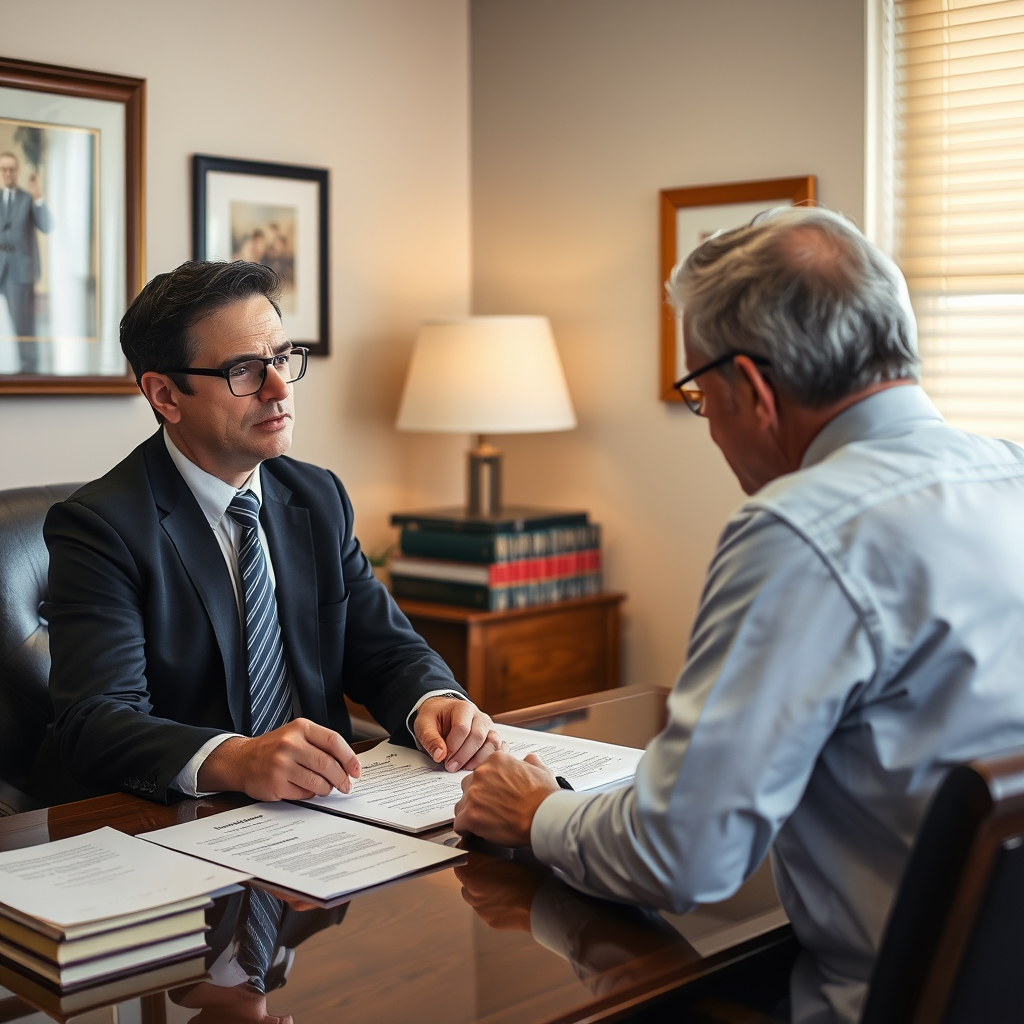
Hackettstown NJ Divorce Lawyer — How Can You Protect Your Rights?
A divorce in Hackettstown, NJ, is governed by New Jersey’s equitable distribution laws under N.J. Stat. § 2A:34-23.1. The process can involve complex financial and custody issues. Law Offices Of SRIS, P.C. provides experienced legal guidance for Hackettstown residents handling divorce. Our Hackettstown NJ divorce lawyer focuses on protecting your rights and securing a fair resolution. Contact us for a case-specific approach.
Understanding Divorce Law in New Jersey
Divorce in New Jersey is a legal process to formally end a marriage. The state is an equitable distribution jurisdiction, meaning marital property is divided fairly, but not necessarily equally, by the court. New Jersey also recognizes no-fault divorce grounds, such as irreconcilable differences for at least six months. The legal framework is established under N.J. Stat. § 2A:34-23.1, which outlines the factors courts consider for alimony and equitable distribution.
Last verified: April 2026 | Warren County Family Court | New Jersey Legislature
Official Legal Resources
For the official text of New Jersey’s divorce statutes, refer to the New Jersey Legislature website. For local court forms and procedures, visit the New Jersey Courts Family Division website.
The Divorce Process in Warren County
Filing for divorce in Warren County involves specific local procedures. The Family Division of the Superior Court handles all divorce cases. Understanding the local rules and timelines is important for managing expectations and preparing your case effectively.
- File a Complaint: The process begins by filing a Complaint for Divorce with the Warren County Family Division, stating the grounds for divorce.
- Serve Your Spouse: Your spouse must be formally served with the divorce papers, giving them 35 days to file an Answer.
- Discovery & Case Management: Both parties exchange financial information and other relevant documents. The court will schedule case management conferences.
- Negotiation or Mediation: Parties attempt to reach agreements on issues like asset division, alimony, and child-related matters, often with the help of attorneys or a mediator.
- Trial: If agreements cannot be reached, the case proceeds to a trial where a judge will make final decisions on all contested issues.
- Final Judgment: Once all matters are resolved, the court enters a Final Judgment of Divorce, legally ending the marriage.
Potential Outcomes in a Divorce Case
In Hackettstown, a divorce can result in court orders for property division, spousal support, child custody, and child support, based on the specific circumstances of your marriage and family.
While every case is unique, common legal resolutions in New Jersey divorce cases include:
- Equitable Distribution of Assets and Debts: Marital property, including real estate, retirement accounts, and businesses, is identified and divided fairly.
- Spousal Support (Alimony): One spouse may be ordered to provide financial support to the other, based on factors like the length of the marriage and each party’s earning capacity.
- Child Custody and Parenting Time: Legal custody (decision-making) and physical custody (living arrangements) are established, along with a detailed parenting time schedule.
- Child Support: A non-custodial parent is typically ordered to pay child support according to New Jersey’s Child Support Guidelines.
Results may vary. Prior results do not aim for a similar outcome.
Why Choose Our Firm for Your Divorce
Founded in 1997, Law Offices Of SRIS, P.C. brings over 120 years of combined legal experience to family law matters. Our firm-wide record includes handling thousands of cases. We understand that a divorce is more than a legal procedure—it’s a significant life transition that requires careful, client-focused representation.
Our Approach to Divorce Cases
Our firm has a documented history of representing clients in family law disputes. We focus on understanding your specific goals, whether that involves negotiating a settlement or advocating for you in court. Every case receives a case-specific approach based on its unique facts.
Results may vary. Prior results do not aim for a similar outcome.
Local Divorce Law Firm Hackettstown NJ
Law Offices Of SRIS, P.C.
44 Apple St, 1st Floor
Tinton Falls, NJ 07724
Toll-Free: (888) 437-7747 | Local: (609)-983-0003 | Local: (732) 200-8300
By appointment only.
Our New Jersey location serves Hackettstown and Warren County. We are accessible to residents throughout the area. If you need a divorce attorney Hackettstown NJ, we offer 24/7 phone consultations at (888) 437-7747. Meetings are held by appointment only.
Frequently Asked Questions
How long does a divorce take in New Jersey?
It depends. An uncontested divorce where both parties agree on all terms can be finalized in a few months. A contested divorce that goes to trial can take a year or more, depending on the court’s schedule and case complexity.
What is the difference between legal separation and divorce in NJ?
Legal separation (divorce from bed and board) is a court order that addresses support and property while the parties remain legally married. A divorce (absolute divorce) legally ends the marriage, allowing both parties to remarry.
How is child custody determined?
New Jersey courts decide child custody based on the best interests of the child. Factors include the parents’ ability to agree, the child’s needs, the stability of each home, and the child’s relationships with parents and siblings.
What is equitable distribution?
Equitable distribution is the fair, but not necessarily equal, division of marital property and debts acquired during the marriage. The court considers factors like the length of the marriage, each spouse’s economic circumstances, and contributions to the marital estate.
Can I get alimony?
It depends. New Jersey courts consider multiple factors for alimony, including the need and ability to pay, the length of the marriage, each party’s earning capacity, and the standard of living established during the marriage.
Hackettstown is one part of a statewide practice, and our page on divorce lawyer New Jersey covers the process from start to finish.